When You Step Back Far Enough
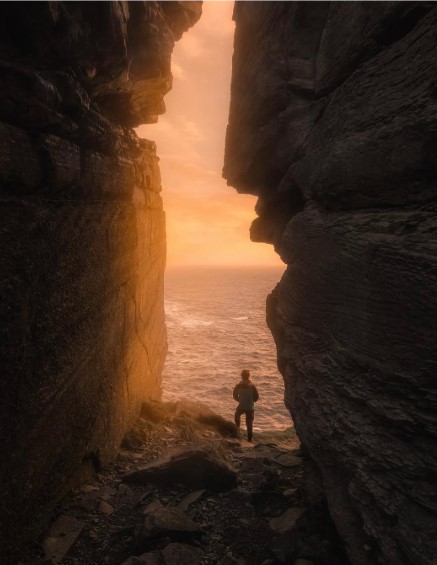
Hags Head. Photograph by Stephen Phelan
I have known Stephen Phelan for three years, the final three years of my time as principal of Scoil Eoin in Balloonagh. Three years is long enough to get the measure of someone, or at least to think you have.
Stephen is cool as a cucumber. I have never seen much evidence that anything greatly alarms him. There could be six hundred children somewhere they shouldn’t be, a photocopier refusing to cooperate, rain arriving at precisely the wrong moment and somebody looking for something that should have been organised three weeks ago, and Stephen would appear to regard the whole situation as broadly manageable.
He also has a very dry sense of humour. Sometimes exceptionally dry. There were occasions when Stephen would say something to me in the corridor and I’d continue walking, thinking nothing much of it. Ten or twenty yards later, it would land. I’d turn around. Stephen would be gone. I suspect this pleased him enormously.
I knew, of course, that he was interested in photography. What took me longer to realise was just how good he was.
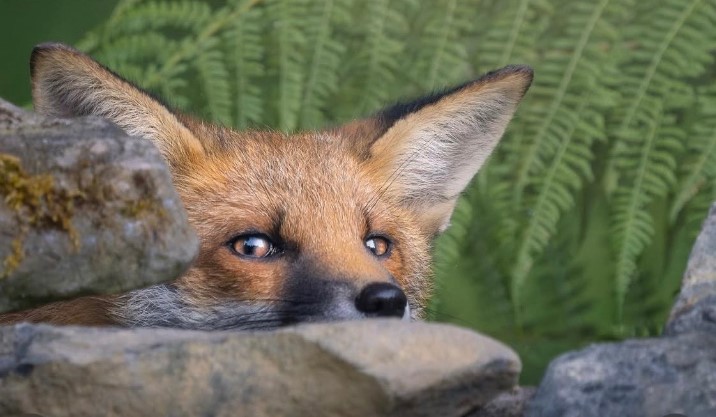
Keeping an eye on things. Photograph by Stephen Phelan
Look through Stephen’s photographs and Ireland becomes slightly unfamiliar. A fox peers between the stones of a wall, apparently keeping an eye on Stephen rather than the other way around. Two goldfinches meet in mid-air, wings spread, feet up, caught in a confrontation so perfectly timed that Stephen’s accompanying instruction — No fighting on Paddy’s Day — seems entirely reasonable. At Hag’s Head, enormous walls of rock frame the Atlantic and a solitary figure stands in the distance, reduced almost to a punctuation mark. There are woods where old ruins sit beneath moss and leaves, the kind of places that seem to have been waiting quietly for someone to notice them.
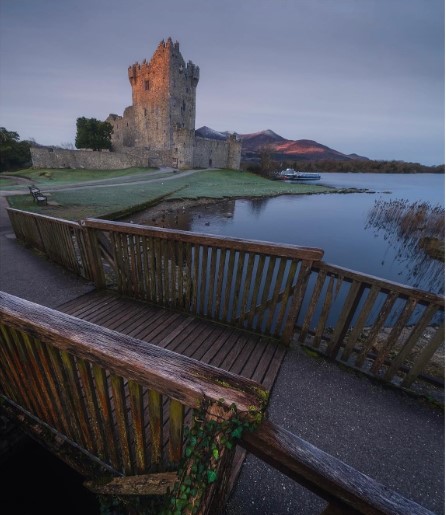
Ross Castle, Killarney, Co. Kerry. Photograph by Stephen Phelan
And there is Ross Castle. One morning Stephen watched the sky erupt with colour. He ran to another position, jumped onto a wall and took the photograph with a wide lens. Behind the castle, the mountains caught the last of the sunrise. The light was gone about a minute later. Then the rain came.
That detail tells me almost as much about Stephen as the photograph does. Most of us would have admired the sunrise from wherever we happened to be standing. Stephen saw it and thought there might be somewhere better to stand. So he moved.
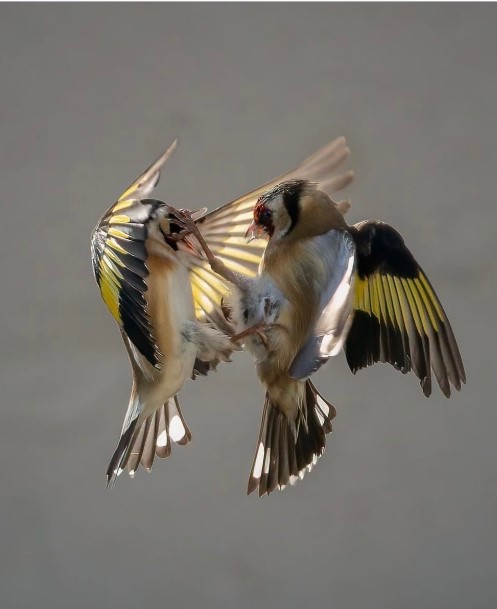
European Goldfinch. Photograph by Stephen Phelan
There is considerable technical skill behind photographs like these. Shutter speeds and lenses and exposures and a vocabulary that can make those of us who point a phone at something and hope for the best feel rather inadequate. But the camera doesn’t tell you to climb onto the wall. It doesn’t tell you to wait. And it certainly doesn’t tell the fox to put its head back up.
Stephen brought some of that into Scoil Eoin. He ran light-painting workshops with the children, which were every bit as intriguing as they sound. A room was darkened, the camera set for a long exposure and the children given fluorescent lights and torches to wave through the darkness. To anyone standing there, they were children waving lights about. Great fun, certainly, although not necessarily something you would ordinarily encourage in a darkened classroom.
Then Stephen showed them the photographs. A movement of the hand had become a ribbon of light. Circles floated in the darkness. Letters appeared. Great sweeps of colour hung in mid-air. The children loved it. Naturally, once they discovered that waving a torch around could legitimately be described as photography, enthusiasm was not in short supply.
But there was magic in it too. They couldn’t see the picture they were making until Stephen showed it to them.
Towards the end of my time at Scoil Eoin, a committee of staff had been quietly planning my retirement and, with impressive efficiency, keeping me completely in the dark. Sinéad Curtin, Kayrena Bolger, Áine Baker, Carolanne O’Donoghue, Siobhán Daly and Tina Conway were among those involved, and there may well have been others — which probably tells you something about just how successfully the whole operation was concealed from me. Whether the idea for what happened on the school field came from Stephen, one of the committee, or emerged somewhere between them, I honestly don’t know.
What I do know is that they had one considerable practical difficulty: me. You cannot arrange almost six hundred children across a school field and send a drone into the air without the principal noticing that something unusual is going on.
Then, unexpectedly, I was absent for a day.
They moved.
Somehow word travelled, the opportunity was seized and almost six hundred children were brought onto the field and arranged in lines and curves before I could reappear and ruin everything. I can only imagine the logistics. Keeping a surprise from one principal is one thing. Persuading almost six hundred primary-school children to participate in it without anybody subsequently letting the cat out of the bag is a considerably more ambitious undertaking.
Stephen sent up the drone. From the ground, no child could properly see what they were making. From above, the lines and curves became words.
GOODBYE MR O’TOOLE & THANK YOU
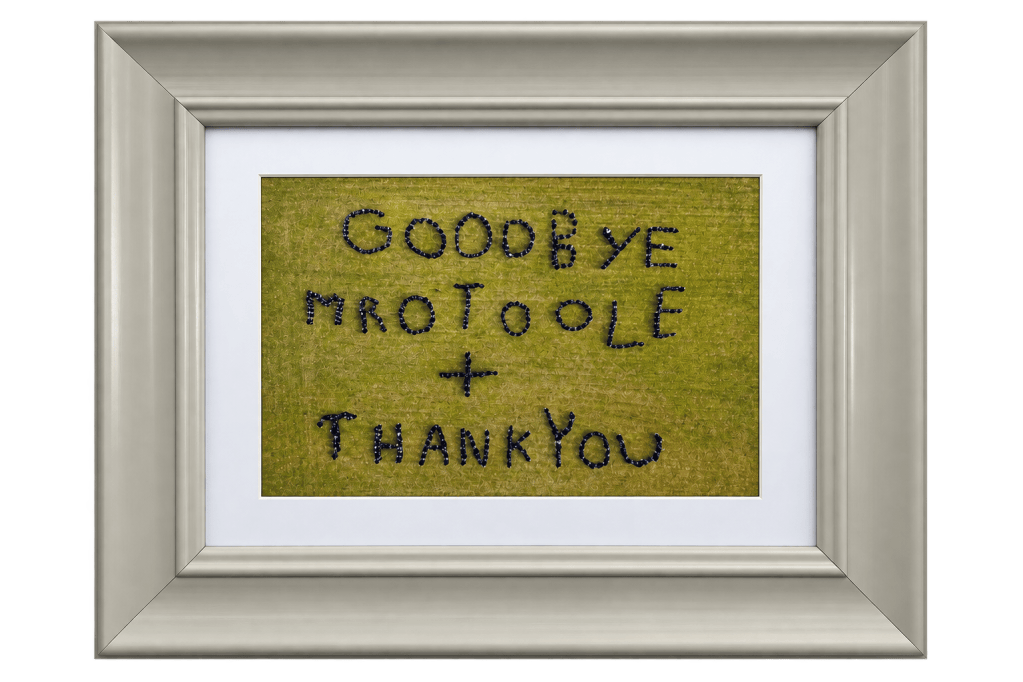
One final surprise. Photograph by Stephen Phelan
And then, presumably, everybody went back inside and carried on as if nothing had happened.
Remarkably, nobody told me.
Later, among the wonderfully generous presents the staff gave me, were two framed photographs taken by Stephen. One was that extraordinary view of almost six hundred children on the school field. The other was an aerial photograph of Scoil Eoin itself.
That second photograph caught me differently. When I arrived as principal almost twenty years earlier, ageing prefabs were still part of a campus with much of its grounds undeveloped. Extensions, upgrades and years of work had changed it enormously, although from inside the place you rarely saw the transformation as a whole. One project finished, became part of everyday school life, and your eye moved to whatever needed doing next.
The staff understood what Stephen’s photograph would mean to me. There, in a single frame, was the school we had spent all those years changing.
I knew the place from the inside. Stephen had given me the view from above.
It occurs to me now that he had done much the same thing for the children in those darkened classrooms. They waved their lights through the air without being able to see the picture they were making. Only afterwards did it appear.
The children on the field couldn’t see their message either.
Neither, for all those years, could I quite see the school.
Three years working with Stephen and it seems I was just a slower learner.
I had to retire first.
See more of Stephen Phelan’s photography on Instagram →
Stay with Heron & Moss
New stories about people, places, home, memory and the ordinary things worth noticing. A new story, occasionally.


Leave a comment