The Soup That Was Already There
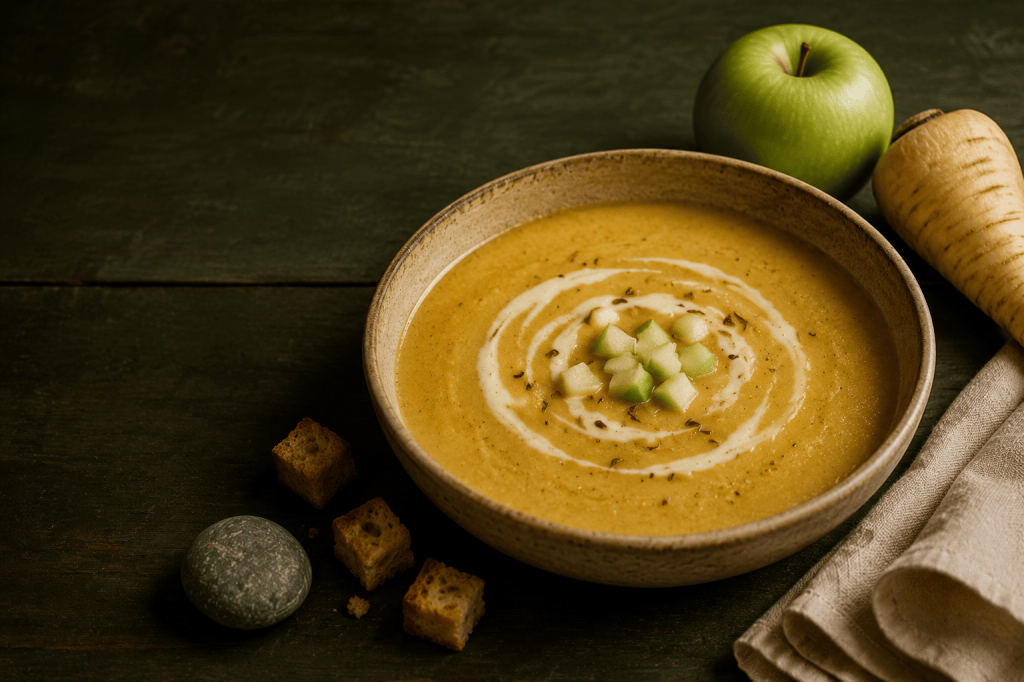
The stone merely gave us somewhere to begin. The soup was already there.
“What is your favourite soup?”
I often began by asking the children that question. Hands went up and the familiar answers came back. Tomato. Chicken. Vegetable. Then I told them mine.
“Stone soup.”
There was always one child who refused to let such obvious nonsense pass.
“You can’t make soup from a stone.”
That was the answer I was waiting for.
I always told the Stone Soup orally. It had more impact that way. I could watch the children’s faces, pause when somebody was ready to interrupt and alter the telling to suit the class in front of me. My years working in kitchens probably helped. I knew how a soup was built, how onions changed in butter, how a pot began to smell once the first vegetables and herbs went in, and how the addition of one ingredient could shift everything that came after it. I could make the soup real enough for the children to smell it, or at least believe they could.
The stone went into the pot first. Then an onion, a carrot and maybe a turnip.
“What else might be in your fridge at home?”
Someone would offer a potato. Another child might have cabbage, a piece of leek or some other vegetable waiting to be used. Each suggestion went into our imaginary pot. Every so often a child proposed a Brussels sprout, at which point my reaction was very close to a gag. It is the one vegetable I cannot abide. Even teamwork has its limits.
Although I began with the same stone, we never made exactly the same soup twice. The lesson was never exactly the same either. We often talked about people working together and the difference between having something to offer and being willing to share it. On another day the story might lead us towards generosity or creativity. The children enjoyed it because their suggestions altered what happened. By the time we finished, even the child who had declared the entire idea impossible had helped to make it possible.
Long before I told the story in a classroom, I had learned another version of it in a kitchen.
I am not afraid of cooking. I grew up in a guesthouse and spent most of my summers, from the age of sixteen until I was fifty, working in kitchens. I was never formally trained, but I learned from chefs in Nick’s Restaurant in Killorglin, the Glenbeigh Hotel and Jacks’ Coastguard Restaurant. I understand flavours and cook largely by instinct and taste. Measurements rarely enter into it. A basic knowledge helps, but so does trusting your own taste buds.
One of my earliest jobs in Nick’s was making onion rings. Peeling and slicing onions carried its own particular pain. My eyes streamed while I tried to see what I was doing, but the person supervising me was watching something else almost as closely: what I discarded.
“There’s another ring in that, Kieran.”
Or he would point to the end I had cut away and tell me it could be diced for the base of a sauce.
“What’s it doing in the bin?”
I learned very quickly that the bin was part of the chef’s work too.
Waste is central to the running of a professional kitchen. Profit and loss depend on getting the best from ingredients while they are fresh and flavoursome. Anything useful thrown away is bad kitchen management and detrimental to the business. We did not speak about it using the language of sustainability. It was simply part of learning the job. The chef looked at what went into the bin because there might still be flavour, money or another dish in it.
Nick usually arrived later in the evening, when the peeling, chopping and much of the other grunt work had been done and service was approaching. His first job was to taste the sauces. He had his standards, and there would be words if something was not right, although that rarely happened. What I remember just as clearly was his respect for the team around him. Even a young commis like me was invited to taste things and to understand why they worked. If a customer sent a particularly good glass of wine into the kitchen, we might be allowed to sample that too. There was something generous about it all.
Nick’s was a wonderful restaurant. I loved its menu: prawn Thermidor, duck à l’orange, cockle and mussel chowder, rolled fillets of plaice stuffed with crab in a champagne sauce, and seafood Mornay, were amongst my favourite. The food was laced with butter, cheese, cream and alcohol—the last of which was a particular favourite of mine.
The fashion today is to strip everything back and allow the fish or meat to be the hero. I may simply be old-fashioned, or my taste buds may have refused to follow trends. Nick’s managed the best of both worlds. It began with good ingredients and retained their flavour, but served them with mouthwatering sauces that made you want to lift the plate and lick it clean. Only restaurant etiquette stood in the way.
John Hughes, one of the chefs at Nick’s, once told me, “Kieran, you need fat to carry flavour.” He did not have to tell me twice. I love butter and cream.
Nick’s could spot another onion ring in what I was ready to discard without producing food that felt in any way miserly. Avoiding waste did not mean withholding pleasure. What was bought was used carefully, and what was cooked was intended to be enjoyed.
There is nothing quite like the camaraderie of a kitchen. It is a high-pressure place in which you learn to keep your head, manage several things at once and prevent the growing line of dockets on the board from taking control of your brain. Everyone has a job, but nobody gets through a busy service entirely alone. We mostly ate on the hoof, choosing whatever we wanted and finding a moment to eat it when we could.
At the end of the summer people sometimes asked how I felt about returning to school.
“I’m looking forward to the break,” I would tell them.
Teaching was not easy; it demanded a different energy and mindset. Sometimes a break does not mean doing less. It can mean leaving one kind of work for another. For years, the school term and the summer kitchen gave me a balance that suited me.
The kitchens also left me with flavours I still recognise. At the Glenbeigh Hotel, I could never pass Killian’s curry. It was rich, dark, fruity and moderately spicy. It began with onions, followed by curry powders, garlic, apple and tomato paste, each addition building another layer. At Jacks, Jonathan’s chowder was my go-to. I love chowder, but never more than when smoked fish is included. Jonathan’s had smoked haddock and, for good measure, a drop of Pernod.
I cannot claim that I consciously consult any of those cooks when I stand at my own cooker. Their lessons are simply there. I know that an apple can sit behind curry rather than turn it sweet. I know what smoked fish does to cream. I know to give onions time, to cook spices before drowning them in stock and to taste before deciding what is missing. I also know, thanks to John, not to be unnecessarily timid with the butter.
Claire and I throw away very little food. Her family own the Glenbeigh Hotel and Jacks, and she is an excellent cook herself, with taste buds that may be even better than mine. She buys what we need and, between us, we generally use it.
Christmas is the exception. We buy for different gatherings and for a while the fridge appears capable of feeding considerably more people than either of us has invited. There may be turkey, cheeses, unused cream, butter and more vegetables than we are likely to need. The cheeses can be frozen. I will manage to finish the ham, however great the personal sacrifice involved.
After two weeks of rich food and indulgence, nobody wants another elaborate plate. We begin craving something simpler. This is usually the point at which we want soup—not another inventive disguise for turkey, nor one final gathering of cheese and crackers, but something warm that makes use of what remains.
I would begin by sweating an onion and whatever leek I happened to have in a little oil and a generous knob of butter. If there were a carrot or stick of celery in the fridge, I would dice and add those too.
The press would decide much of what happened next. Curry powder, cumin, coriander and a bay leaf or two would find their way into the pot. I’d cook them gently for a minute or two, stirring, until fragrant, so the spices develop a deeper flavour. Then I’d add garlic and some cooking apples, followed by potatoes and parsnips to give the soup body and thickness. Finally some chicken stock—most likely boiling water with stock cubes or bouillon—and leave everything to simmer.
Once the vegetables were soft, I would blend the soup, add cream and possibly another knob of butter to give it a good sheen. Then salt and pepper, followed by the most reliable part of the method.
Claire would taste it.
“That’s lovely. It just needs another bit of salt.”
And it probably would.
The stone itself never provided much flavour. It merely gave us somewhere to begin.
The soup was already there. It was in the vegetables waiting to be used, in an apple softening in the fruit bowl and in the heel of bread that could be cut into croutons. It was also in the things I had been taught: another ring in the onion, fat carrying flavour, curry built in layers and the need to taste before reaching for anything else.
All that remained was to put on the pot.
Curried Apple and Parsnip Soup
A provisional recipe for people who prefer measurements.
Ingredients
- 1 tablespoon olive oil
- A generous knob of butter, plus a little more to finish
- 1 large onion, diced
- 1 leek, washed and sliced, if available
- 1 carrot, diced, optional
- 1 celery stick, diced, optional
- 2 garlic cloves, finely chopped
- 2 cooking apples, peeled, cored and diced
- 3 medium parsnips, about 400g, peeled and diced
- 2 medium potatoes, about 300g, peeled and diced
- 2 teaspoons medium curry powder, or enough to taste
- 1 teaspoon cumin seeds or ground cumin
- 1 teaspoon ground coriander
- 1–2 bay leaves
- About 850ml chicken or vegetable stock
- 100ml cream, or enough to taste
- Salt and freshly ground black pepper
- Stale bread for croutons, optional
Method
Warm the oil and butter in a large saucepan. Add the onion and leek, if using, and cook over a moderate heat until softened without taking on too much colour. Add the carrot and celery if they are available and allow them to soften too.
Add the garlic, curry powder, cumin and coriander. Cook for a minute or two, stirring, until the spices become fragrant. Add the apples, parsnips, potatoes and bay leaves, then pour in enough stock to cover everything comfortably.
Bring to a gentle boil, reduce the heat and simmer for about 20 minutes, or until the parsnips, potatoes and other vegetables are completely tender. Remove the bay leaves and blend until smooth.
Return the soup to a low heat and add the cream. Stir in another small knob of butter if it needs richness or sheen. Taste before adding salt and pepper, then taste again. If Claire is available, ask her.
Serve with croutons made from yesterday’s bread. Keep the Brussels sprouts for somebody else.
Stay for another story
Heron & Moss is a place for stories about food, homes, people and the things around us that are easily overlooked. Subscribe below and the next story will find its way to you.


Leave a comment